A small garden is not a compromise. The tighter the space, the more each plant has to earn its place — and nothing earns it quite like a flower that feeds a bee. You do not need a meadow or a long border. A few pots by the back door, a sunny patch against a wall, a metre of border: enough to keep nectar coming from late winter to the first frosts. Here are ten dependable plants, season by season, with habits that make them work harder.
Spring: the hungriest weeks of the year
The first bumblebee queens wake in February and March with very little to eat. Anything flowering then is worth its weight in gold.
Crocus. Plant corms in September and October, about 8cm deep, in sun. Species such as Crocus tommasinianus are the best value: early, wide-opening so the pollen is easy to reach, and happy to multiply at the front of a border or in rough grass.
Pulmonaria (lungwort). Pink buds and blue flowers, sometimes both on one stem, opening in March and April. It tolerates shade under a fence or a north-facing wall, where the early bumblebees tend to be looking, and the hairy-footed flower bee is fond of it.
If you have room for one more, add a wallflower (Erysimum) or a small crab apple — blossom on a tree delivers a huge amount of pollen in one go.
Early summer: generous, easy, forgiving
Catmint (Nepeta). If you plant nothing else from this list, plant this. Nepeta racemosa 'Walker's Low' flowers from late May onwards and keeps going for months if you shear it back after the first flush. Sun and decent drainage; it sulks in wet clay. Bees work it from morning to evening.
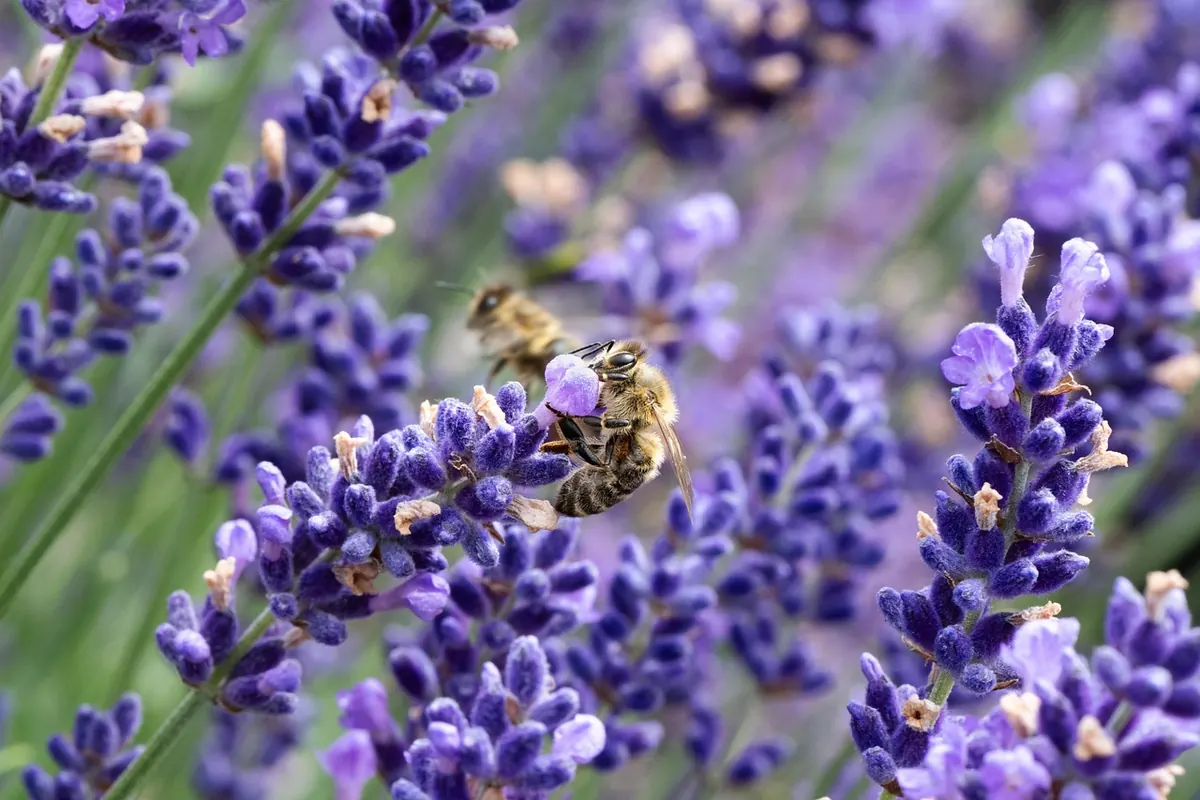
Lavender. English lavender (Lavandula angustifolia) is compact enough for a pot and irresistible to bumblebees. Full sun and sharp drainage — mix grit into the compost, and never cut into old wood when trimming in late summer.
Herbs. Chives, thyme, oregano and marjoram are first-rate pollinator plants if you let them flower instead of snipping every bud. Oregano is a particular favourite of hoverflies and small solitary bees. Keep them in pots by the door and you will notice the traffic.
Foxgloves. Digitalis purpurea suits the back of a border or a shady corner. Long-tongued bumblebees push right inside the bells. Sow it once and it will seed about.
A word about hoverflies
Hoverflies are not bees and not wasps, but they do a great deal of quiet work, and their larvae eat aphids. They have short mouths and cannot reach into deep flowers, so give them flat, shallow, open things: yarrow, fennel, dill, coriander left to bolt, feverfew, chamomile and daisies generally.
High summer: tall, airy, full of movement
Verbena bonariensis. Tall, see-through stems topped with little purple flowers from July until the first cold nights. Butterflies settle on it and hoverflies work it, and because the stems are so thin you can plant it near the front without blocking the view.
Single-flowered dahlias. Open-centred kinds with a visible ring of pollen are excellent late-summer plants; tight pom-pom and cactus types are of little use, as the nectar sits under layers of petals.
Echinacea, helenium and rudbeckia. Daisies with a prominent central cone — exactly the landing pad bees and butterflies want. Leave the seed heads standing and the goldfinches will deal with them.
A plant stressed by drought stops producing nectar, so water pots in the evening and mulch borders.
Autumn: the last meals before winter
Hylotelephium spectabile, still sold as Sedum spectabile, is the best autumn plant for a small garden: flat heads of pink flowers from September, turning bronze as they age, and every butterfly in the neighbourhood will find them. Leave the stems standing through winter and cut back in early spring.
Michaelmas daisies (Symphyotrichum). Compact varieties work well in a pot and flower when little else does.
Ivy. Unglamorous, but flowering ivy in September and October is one of the richest late sources of nectar you can offer — and it is the caterpillar food plant of the holly blue. Let a patch climb a fence.
Small habits that make a real difference
- Plant in groups. Three or five of the same plant together attract far more visits than the same number scattered as singletons; bees learn a flower and then work it hard.
- Choose single, open flowers. Many doubles have little or no nectar, and the petals block access.
- Keep a patch of nettles. Stinging nettle feeds peacock, small tortoiseshell and red admiral caterpillars. Sink a large pot of it into the ground to stop it running.
- Add other caterpillar plants: nasturtium for large and small whites, honesty for orange tip, bird's foot trefoil in a rough lawn edge for common blue.
- Skip the sprays, even the ones labelled bee-friendly.
- Give them water. A shallow saucer with pebbles in it, refreshed daily in hot spells.
- Leave the tidying until spring. Seed heads, hollow stems and leaf litter are winter accommodation.
A simple plan for a metre of border
Pick a sunny spot at least 1.2m wide and 2m long, or assemble the same plants in large pots. Spring: a drift of crocus at the front with pulmonaria behind. Early summer: catmint in the middle, lavender at the sunny end, herbs by the path. Then verbena and a single dahlia for late summer, sedum and a Michaelmas daisy for autumn, and ivy on the boundary wall.
Water properly for the first season and most of these will look after themselves afterwards. If the full list feels like a lot, start with catmint, lavender and sedum. Three good plants, grown well, bring more life into a small garden than twenty fussy ones.
Photo: xiSerge / Pixabay