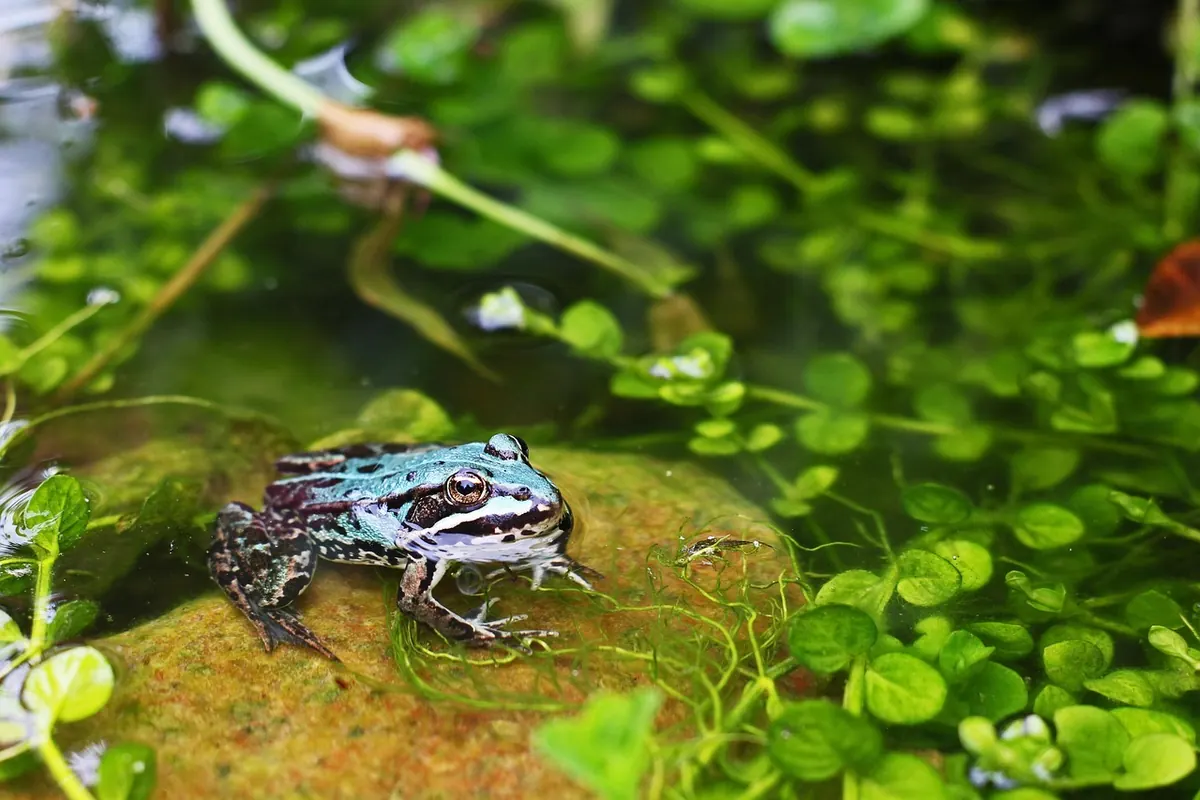
A pond is the most generous thing you can put in a small garden. Two square metres of water will bring in frogs and newts, damselflies and dragonflies, and a steady trickle of birds dropping in to drink and bathe. You do not need much room, much money or any machinery. A spade, a liner, a few native plants and a spare weekend are enough. The one thing worth getting right from the first cut of the turf is the design, because a pond built for wildlife is a very different thing from a pond built for fish.
Choosing the Right Spot
Half a day of sun and half a day of shade suits a small pond well. Sun warms the water and gets insect life and plant growth going; too much sun, especially in a shallow pond, encourages blanketweed and green water. Aim the pond where you can see it from a kitchen window or a favourite chair. You will notice problems sooner, and you will actually watch it.
Avoid the obvious traps. Do not site it under a tree: leaves fall in and rot, roots may push at the liner, and deep shade keeps the water cold and quiet. Do not put it at the lowest point of the garden, where rainwater drains off beds and lawn, carrying soil, fertiliser and any weedkiller with it. Nutrient-rich water means algae. If the ground slopes, a partly raised pond on the downhill side saves a lot of digging and gives you a comfortable edge to sit on.
If there are small children in the house or visiting, think about this now rather than later. A shallow, gently shelved pond is safer than a deep one, and a raised design with a rigid grille fitted just below the surface keeps water visible and accessible to wildlife while removing the main risk. Supervise children near any water, always.
Size, Depth and Shape
A pond 1.5 metres by a metre is a real pond. It will hold frogs, insects and a surprising amount of plant life. Bigger is easier to keep balanced, but small works if you plant it well and keep the water clean.
Dig to about 45–60cm at the deepest point. Anything shallower risks freezing solid in a hard winter and overheating in summer; anything much deeper is unnecessary work in a small garden. As well as the deep centre, include a shelf around 20–25cm deep for marginal plants, and slope one side gently into the water to make a shallow beach. That beach matters more than it sounds. Hedgehogs, fledglings and frogs all drown in ponds with vertical sides, and a gradual ramp gives them somewhere to walk out.
An irregular outline — a kidney, an oval, a soft-edged blob — looks far more natural than a rectangle. Mark it out with a rope or a length of hose before you lift a spade, and stand back to check the shape from the house.
Digging and Lining
Lift the turf first and stack it somewhere shady; you can use it later to soften the edge. Keep the subsoil for planting pockets and for filling baskets. Then work in layers:
- Dig the outline to the full depth, cutting the shelves as you go.
- Remove sharp stones, glass, and any thick roots that could puncture the liner.
- Check the rim is level by laying a straight plank across the hole with a spirit level on top. A pond that is out of level will show bare liner on one side for ever.
- Line the hole with old carpet, a layer of damp sand, or geotextile fleece. This underlay is not optional — it is what stops a stone ruining your weekend.
- Lay the liner loosely, weigh the edges down with bricks, and start filling with water. Ease the folds flat as the weight of water settles it. Do not trim the liner until the pond is full.
Butyl rubber around 1mm thick is the most durable and the most forgiving of awkward shapes; cheaper polythene liners work but have a shorter life, and rigid preformed liners suit only very small or formal ponds. To work out how much you need, take the length plus twice the depth plus at least 30cm at each end for the overlap, and do the same calculation for the width.
Edging the Pond
The liner should never be visible. Turf laid so it overhangs the water slightly is the simplest and most natural finish, and it hides the edge within a season. Stones, cobbles and gravel also work well — a shallow gravel beach on the sunny side is a favourite spot for birds and bees. Bricks laid flush give a tidier look if the pond sits near a patio.
Keep the water level a few centimetres below the surrounding soil so wildlife can walk in and out, and hide the exposed liner with overhanging plants or stones. If you use timber, choose untreated oak or a pressure-treated board, and avoid anything freshly coated in creosote or wood preservative near the water. Finally, add a rough plank or a gently sloping stone as an escape ramp, and leave a few stones breaking the surface for insects to perch on.
Planting with Native Species
Plants do the hard work in a wildlife pond: they shade out algae, oxygenate the water and give cover to everything from tadpoles to damselfly larvae. Aim to have about a third of the surface covered by planting by the end of the second summer.
Plant in baskets filled with plain garden soil or clay subsoil. No compost, no fertiliser — nutrients feed algae, not your pond. Top each basket with gravel to stop the soil washing out. Choose from three layers: submerged oxygenators such as hornwort and water starwort; marginals such as water forget-me-not, marsh marigold, flowering rush and ragged robin; and moisture-lovers for the damp ground at the edge, including lady's smock and meadowsweet. If you want a water lily, choose a small variety, as the native white lily quickly outgrows a small pond.
Buy from a reputable aquatic nursery and check the plants for duckweed. Never take plants from the wild, and never accept a bucketful from another pond, however well meant — that is how invasive weeds and disease travel between gardens. Floating pennywort, water fern, parrot's feather and New Zealand pigmyweed can smother a pond in a season and are genuinely difficult to remove.
Filling Up and Letting Wildlife Arrive
Rainwater is the best fill: a water butt and a hose, or a few cans carried from the downpipe. Tap water is not harmful to wildlife, and the chlorine disperses within a day or two, but it arrives full of nutrients that will feed algae, so use it only when you must and fill slowly.
Then do the hardest thing of all, which is nothing. A healthy wildlife pond is not stocked. Five things to leave out:
- Fish, including goldfish, which eat tadpoles, larvae and almost everything else.
- Frogspawn, tadpoles or water carried from another pond — a common way to spread ranavirus, amphibian fungus and invasive plants.
- Duckweed and any plant you cannot identify with confidence.
- Tap water in large volumes when rainwater is available.
- Pesticides, fertilisers and weedkillers anywhere near the water or the ground that drains into it.
Left alone, the pond will fill itself. Water beetles and pond skaters arrive within weeks. Frogs usually find a new pond within a year or two if there is any population within a few hundred metres; newts take longer, and dragonflies may turn up the same summer. Let them come.
Looking After a Small Pond
Top up with rainwater through dry spells and keep the level within about 5cm of the rim. If blanketweed takes hold in midsummer, twirl it out with a stick and leave the tangle on the bank overnight, so shrimps and tadpoles can crawl back in. Cut back excessive growth in early
Photo: KRiemer / Pixabay