A bird feeder is a small piece of engineering, and the birds that use it are the ones its design suits. Get that roughly right and you will attract a wider range of species, waste less food and spend far less time scrubbing. Get it wrong and you will be tipping sodden, clumped seed into the bin every few days, wondering why the same three sparrows keep turning up.
There is no single best feeder. There is the feeder that fits your garden, your budget, your patience for cleaning, and the birds you would actually like to see. Here is how the four main types compare in British conditions.
Seed feeders: the dependable all-rounder
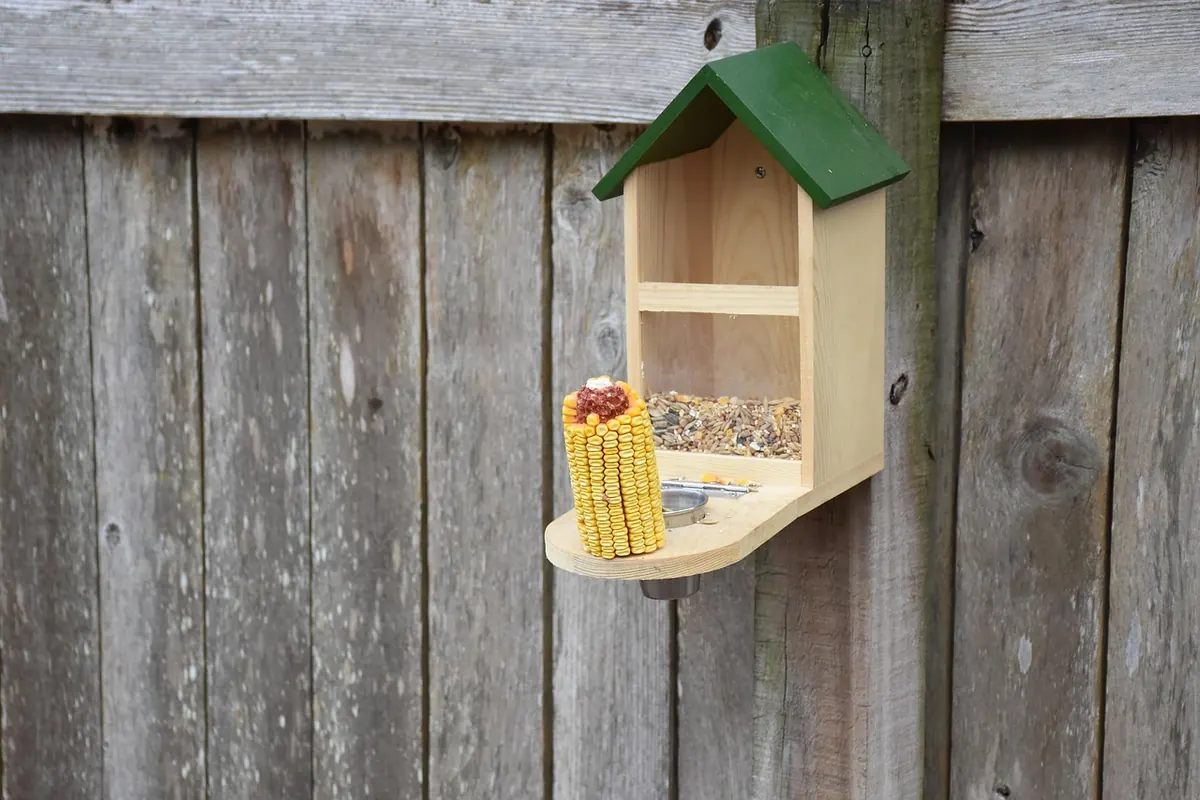
Seed feeders are usually tubes with a ring of ports and perches, or hopper-style boxes that let seed trickle down. They take mixed seed, sunflower hearts, or straight seeds such as black sunflower.
The choice of seed matters as much as the feeder. A general mix with a lot of wheat and husk leaves a carpet of debris under the feeder and appeals mostly to the larger, bossier visitors. Sunflower hearts are eaten whole, so there is no shell litter, and they are taken by blue and great tits, coal tits, greenfinches, chaffinches and house sparrows. If you want the widest range of birds with the least mess, hearts in a tube feeder are hard to beat.
Pay attention to the fittings. Metal ports and perches survive squirrel teeth and the occasional woodpecker; plastic ports get chewed into ragged holes within a season. A feeder with a short perch ring tends to favour small birds, while a wide tray attracts starlings and pigeons, which will empty a tube in an afternoon.
Peanut feeders: food for the acrobats
Peanut feeders are tubes of wire or mesh, or open cages that hold a handful of nuts. They suit birds that cling and hang: blue tits, great tits, nuthatches, and in many gardens a greater spotted woodpecker.
Buy plain, unsalted peanuts and never use salted or roasted nuts from the kitchen. Check them for damp and mould before they go out, since mouldy nuts are genuinely harmful to birds. Many gardeners switch to peanut granules or kibble during the breeding season, when whole nuts are a poor choice for chicks. Choose a sturdy hanging point, because a full peanut feeder is heavy, and give it a baffle above if squirrels are a problem. Inspect mesh designs as they age; anything frayed, bent or snagging should be replaced rather than patched.
Suet feeders: high energy for cold, wet weather
Suet comes as balls, cakes, blocks, pellets and filled logs, and it earns its place in a British garden through the winter and again in spring, when adults are feeding young. It is the most energy-dense thing you can put out.
Whatever you buy, take it out of any plastic netting and put it in a proper holder. Netting is a real hazard: feet and tongues get caught, and the nets end up loose in the garden. A cage feeder keeps starlings from taking an entire ball in one sitting, while a cake holder with a small tail-prop is ideal for woodpeckers and nuthatches.
Fat behaves differently in the heat. Plain suet softens and can turn rancid in a warm spell, so either use a summer version with a higher cereal content, switch to pellets, or simply take suet down during a heatwave and put it back when the weather breaks.
Nyjer feeders: a niche worth having
Nyjer is a tiny, oil-rich black seed, and it needs a feeder with very fine ports or a fine mesh so it does not simply pour out. Goldfinches are the classic visitor, along with siskins and, in some years, redpolls. If you have never seen goldfinches in your garden, a nyjer feeder hung quietly near a shrub is one of the better ways to find out whether they are nearby.
The catch is freshness. Nyjer dries out and clumps, and stale seed will be ignored. Buy small quantities, keep the bag sealed and dry, and only half-fill the tube if you have a handful of visitors. These feeders are also the fiddliest to clean, so a long bottle brush and a willingness to soak the parts in hot water are part of the deal.
How the four compare
- Cost: seed and peanut tubes are the cheapest to buy and the easiest to replace. Specialist nyjer feeders and good suet holders cost more up front, but the real spending is the food, and that varies far more than the hardware.
- Cleaning effort: seed feeders are straightforward if the parts come apart and you use hearts. Peanut feeders need a check for damp nuts. Nyjer feeders and mesh suet cages are the most awkward, and the ones most often left too long.
- British weather: damp is the main enemy. Seed clumps and moulds, nyjer goes stale, suet softens in heat. A rain guard, drainage holes in tray-style feeders and a sheltered hanging spot make more difference than any expensive design.
- Typical visitors: seed brings tits, finches and sparrows; peanuts bring tits, nuthatches and woodpeckers; suet brings starlings, tits and robins as well as woodpeckers; nyjer brings goldfinches and siskins.
- Best for: mixed gardens and beginners, seed; clinging woodland species, peanuts; winter and nesting season, suet; a quiet corner and a goldfinch ambition, nyjer.
Making it work in a real garden
Position matters as much as the feeder. Hang feeders where you can see them comfortably, close to shrubs or a hedge so birds have somewhere to retreat, but not so close that a cat can sit unseen underneath. If birds hit your windows, move the feeder either very near the glass or well away from it, and add an external window sticker.
- Clean every feeder properly every week or two, and more often in warm or busy periods. Dismantle it, wash in hot soapy water, use a bottle brush on the ports, rinse well and let it dry in the sun before refilling.
- Rotate your feeders rather than filling all of them to the brim. Two feeders in use and two drying is a workable system for most gardens.
- Never top up over wet, clumped or mouldy food. Empty it, clean it and start again.
- Wash your hands after handling feeders and food, and keep a separate bucket and brush for the job.
- If you see a bird looking fluffed up, sluggish or unwilling to fly, take the feeders down, clean everything thoroughly, and seek advice from a wildlife charity or a vet before putting them back.
Start with one good seed feeder and see who arrives. Add a suet holder when the weather turns, and a nyjer feeder in a sheltered corner if goldfinches are about. Two well-kept feeders will always outperform six neglected ones, and the birds will tell you soon enough whether you got the choice right.
Photo: Ray_Shrewsberry / Pixabay