A hedge earns its keep in a small garden. It screens the bins, softens road noise, gives the robin somewhere to nest and hums with insects on a warm evening. But the three natives sold in almost every bare-root catalogue — hawthorn, blackthorn and hazel — behave quite differently once they are in the ground. One clips into a neat shoulder-high screen. One sends runners through the lawn. One shrugs off shade and never scratches your forearms. Here is how they compare.
Size: how much hedge have you actually got room for?
Left alone, hawthorn (Crataegus monogyna) becomes a small tree of six metres or more. In a garden hedge, though, it is wonderfully biddable. Expect roughly 30–60cm of growth a year, so a bare-root whip planted at 40cm will make a decent 1.5m screen in three or four seasons on reasonable soil. Kept at 1.5–2m with one annual cut, it stays dense right down to the ground.
Blackthorn (Prunus spinosa) reaches a similar height in theory, but height is not the problem. Width is. Blackthorn suckers: its roots travel and throw up new stems, often a metre or two beyond where you planted it. In a small garden beside a lawn, a path or a vegetable bed, that is a nuisance rather than a feature. Plant it only where spreading is welcome — a boundary you would happily see thicken, or a wild corner you can mow around.
Hazel (Corylus avellana) will reach four to six metres if you let it, but its great virtue is that it coppices. Cut it to the ground and it returns. Managed at 1.5–2m with a hard cut every few years, it makes a soft, thick screen with no thorns at all.
Soil, shade and exposed sites
Hawthorn is the most forgiving of the three. Clay, chalk, sand, thin dry ground — it copes with all of them, and it is the best choice for a windy, exposed boundary or a coastal garden. If your site is bleak and the soil is poor, hawthorn will still make a hedge.
Blackthorn is nearly as tolerant and is often found growing on heavy clay, though it flowers best in full sun. It is a poor choice for a north-facing wall of shade.
Hazel is a woodland understorey plant, and that tells you what it wants: some shelter, reasonably fertile, well-drained soil, and ideally a little shade. It is easily the best of the three for a north-facing boundary or a spot beneath a neighbour's trees. What it does not like is ground that sits wet all winter. On a heavy clay that floods, choose hawthorn or blackthorn instead.
Wildlife: what each one brings
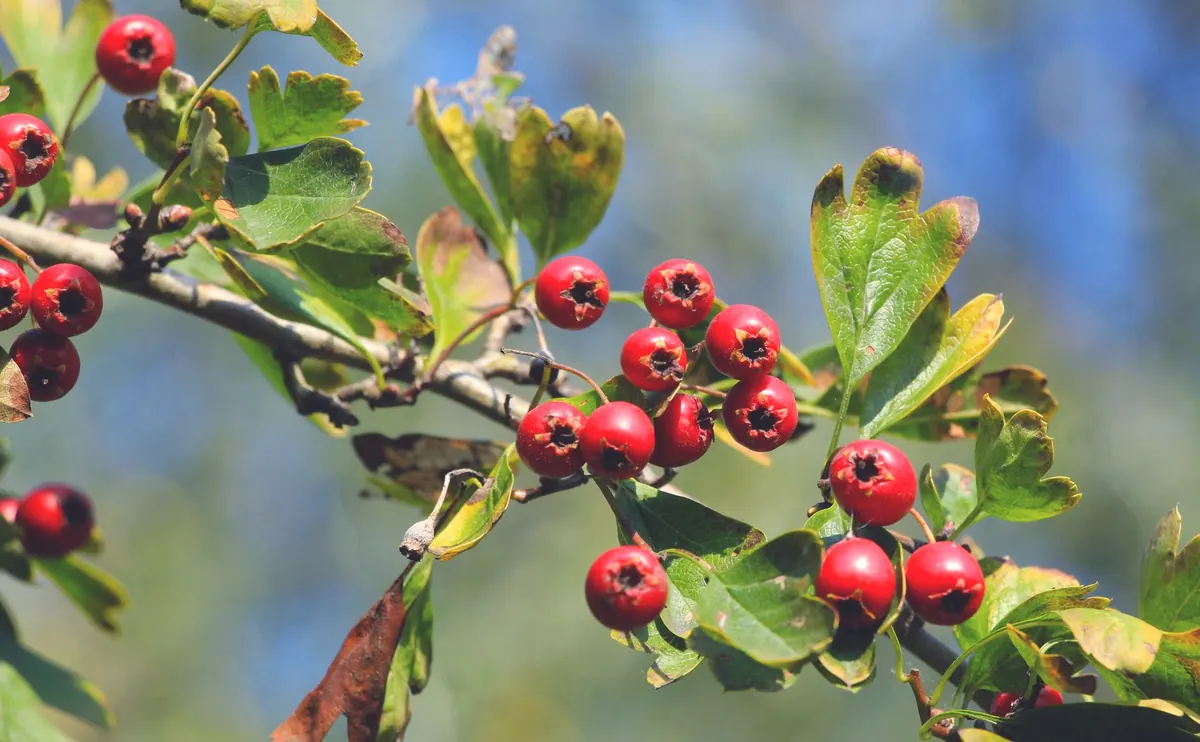
Hawthorn flowers in May, then holds red haws from September well into winter. Those berries are food for redwings, fieldfares and thrushes, and the dense, thorny growth is one of the safest nesting places in any garden. It also feeds a wide range of moth caterpillars, which in turn feed the chicks.
Blackthorn flowers on bare black wood in March or April, often providing the first nectar of the year for early bees. The brown hairstreak butterfly lays its eggs on young blackthorn stems, and the sloes make excellent gin once the first frosts have softened them. Pick from the outside of the hedge and leave plenty behind for the birds.
Hazel gives you catkins from midwinter — the lamb's tails that lift a grey February. They are wind-pollinated, so there is no nectar, but bees will collect the pollen on a mild day. Come autumn there are nuts for squirrels, nuthatches, woodpeckers and, in the right parts of the country, dormice. Add the twiggy base for nesting cover and the leaf litter underneath, and hazel is quietly one of the hardest-working plants in a small plot.
Maintenance, thorns and the nesting season
All three need less work than most people expect, but they ask for it at different times and in different ways.
- Hawthorn: one cut a year, in late winter before growth starts or after flowering in June. It regrows from old wood, so you can renovate a neglected hedge hard. Bear in mind that winter trimming removes some of the flowering wood, so you will get fewer haws that autumn. The thorns are a genuine deterrent to intruders and a genuine nuisance beside a narrow path. Wear gloves, long sleeves and eye protection when cutting.
- Blackthorn: the thorniest of the three, and the suckering habit means extra work. Prunus species are best pruned in summer, in dry weather, to reduce the risk of silver leaf infection entering the cuts — which clashes awkwardly with the nesting season. Check carefully for active nests before you start; nests in use are protected by law. If you find one, wait.
- Hazel: no thorns, easy to handle, and it takes a hard cut without complaint. Cut the whole hedge back to around 45–60cm every two or three years in winter and it will come again bushier than before. If you would rather not lose the whole screen at once, cut a third of it each year on rotation.
The three at a glance
- Hawthorn: sunny or exposed site, any soil, 1.5–2.5m, haws and nesting cover, one cut a year, very thorny.
- Blackthorn: full sun, most soils, early flowers and sloes, suckers and spreads, thorniest, summer pruning.
- Hazel: sun or shade, well-drained fertile soil, catkins and nuts, no thorns, coppice hard every few years.
Choosing and planting
If you have a sunny boundary, ordinary soil and want the most wildlife for the least effort, plant hawthorn. If shade is your problem, or there are children and pets to think about, plant hazel. If you want sloes, early bees and a wild corner, and you can live with the suckers, choose blackthorn.
Mixing is often the best answer in a small garden. A hawthorn hedge with a hazel whip every few metres gives you berries, catkins and a far longer season of interest, and the hazel does not mind the competition.
Plant bare-root whips between November and March, while they are dormant, at 30–45cm apart. A staggered double row makes a thicker screen in the same footprint. Cut the whips back by about a third straight after planting to encourage bushy growth from the base, mulch well, and water through the first two dry summers. After that, an annual trim is all that is required.
Two last things. Leave the hedge untrimmed between March and August wherever you can, and always check for nests before starting the trimmer. And before removing an existing hedge, check with your local council, since some hedgerows are legally protected; if a boundary hedge is already the subject of a dispute with a neighbour, take proper advice before planting anything that will grow tall.
Photo: Gosia K / Pexels